ServicesFlat Roofing
Flat Roofing in Tempe
We repair, recover and replace flat and low-slope roofs on your home, using membranes and coatings suited to long, hot summers. You get water that drains where it should, sealed parapets and edges, and a written estimate that explains each line before work begins.
Low-slope roofs need a different approach
A flat roof is never truly flat. A good one falls about a quarter inch per foot toward a scupper or drain, so water leaves within a day or two. When that slope is lost to sagging decking or layers of old patches, water sits, the membrane softens and seams start to lift.
Around Tempe, flat roofs show up on mid-century ranch homes, pueblo-style houses with parapet walls, room additions, carports and patio covers. Many sit beside a tile or shingle main roof, and the tie-in between the two is often where a leak begins.
We check the whole assembly, from the deck up to the edge metal, then give you a straight answer on the right level of work: a targeted fix, a new layer over the existing roof, or stripping it down to the deck. If foam would serve your roof better, we will say so and point you to our Foam Roofing page.
What our flat roofing work covers
- Modified bitumen systems
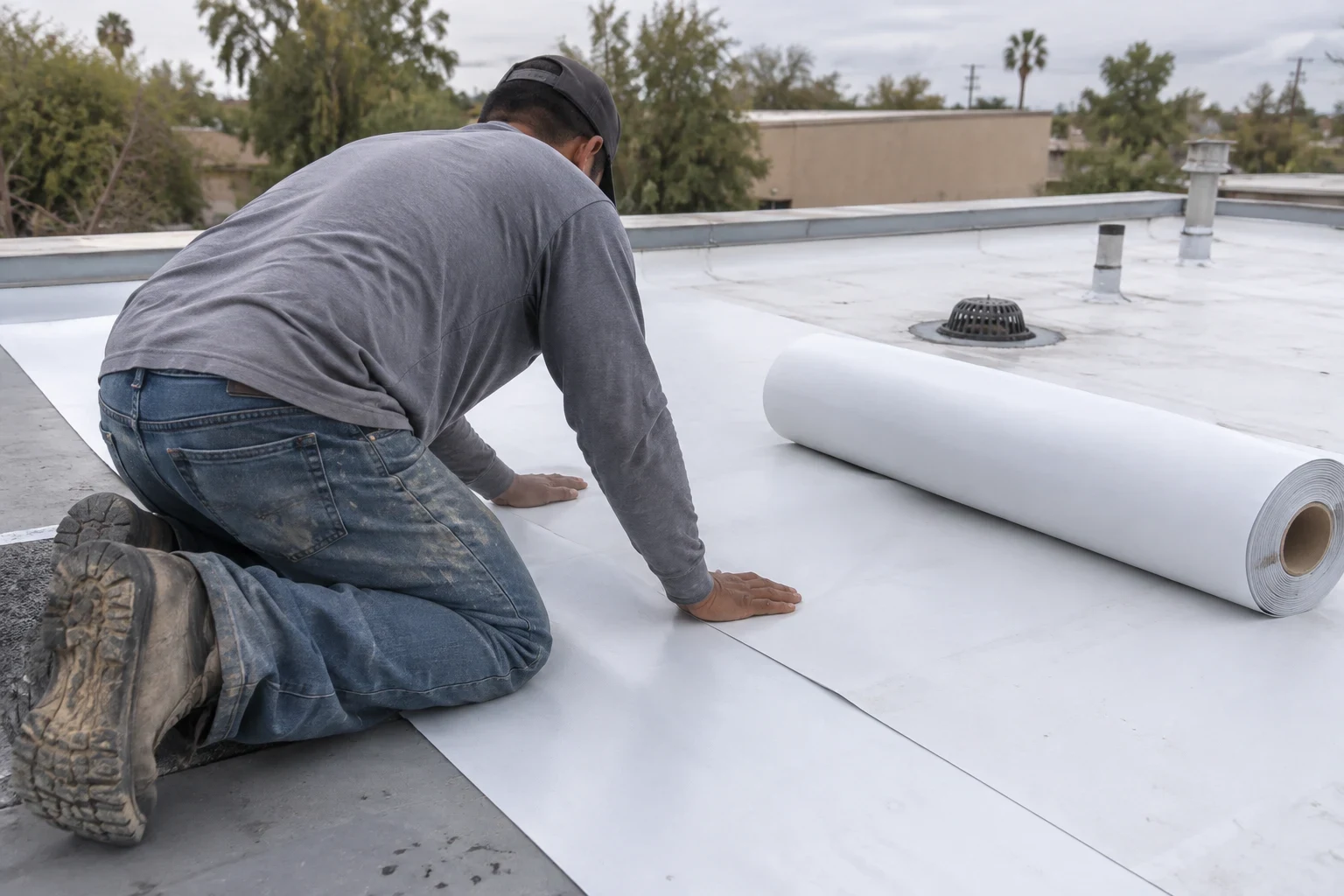
- Two-ply torch-down or self-adhered modified bitumen finished with a granulated cap sheet. The granules shade the asphalt from UV, which is what dries out and cracks a flat roof under strong sun.
- TPO single-ply membrane
- White TPO reflects much of the afternoon sun and helps keep the room below cooler. Seams are welded with hot air, then probed by hand so we know each one is closed.
- Reflective coatings
- On a sound roof, an elastomeric or silicone coating can add years of service. We clean, prime and repair seams first, because coating over a wet or blistered surface only hides trouble.
- Parapets, scuppers and edges
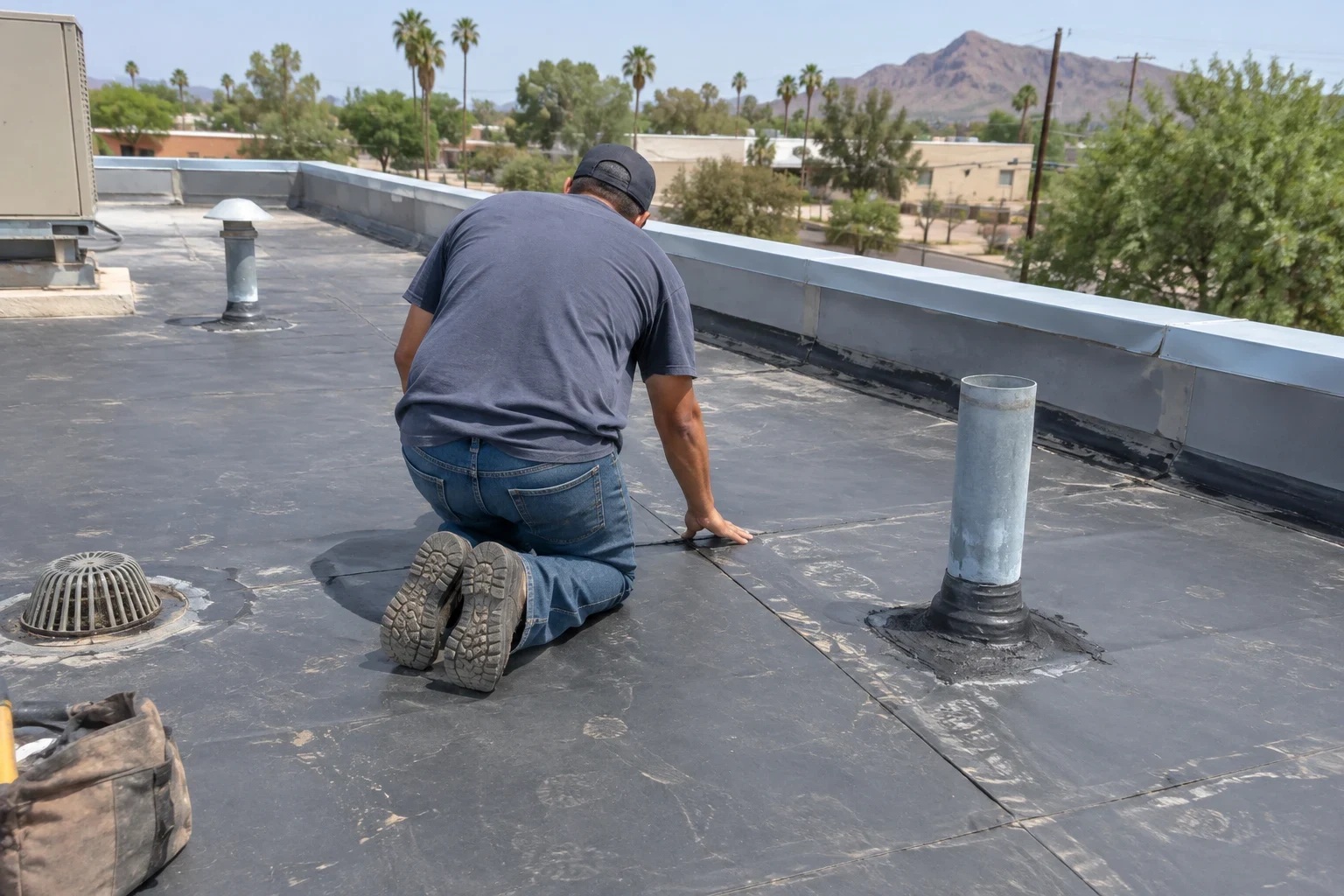
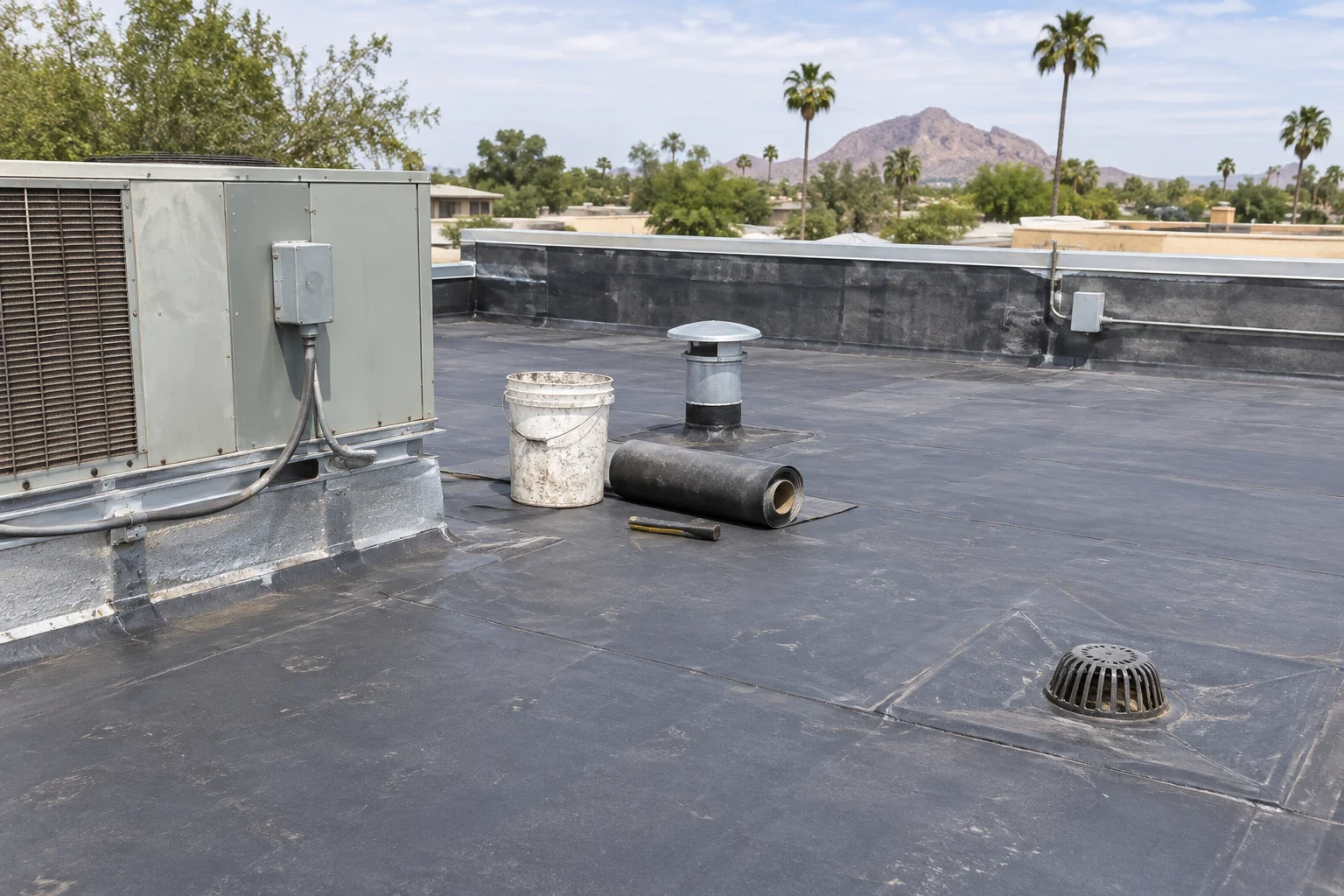
- We re-flash parapet walls, reset scuppers, build crickets that push water toward the outlet and replace rusted edge metal. Most flat roof leaks we trace start at these details rather than in the open field of the roof.
- Deck and insulation repair
- Soft or rotted decking is cut out and replaced before new material goes down. Where tapered insulation can correct a low spot, we include it in the estimate.
- Rooftop equipment and penetrations
- Evaporative cooler and AC curbs, vent pipes and skylights get new flashing. If a unit needs to be lifted, we coordinate the timing with your HVAC contractor.
Signs your flat roof needs attention
Water still standing after rain
If puddles remain two days after a monsoon storm, the slope or drainage has failed. Standing water speeds up wear and adds weight the deck was never meant to carry.
Blisters and bubbles
Raised pockets mean moisture or air is trapped under the membrane. Afternoon heat expands them day after day until they split.
A crazed or bare surface
Cracking that looks like dried mud, or a cap sheet that has shed its granules, has lost its protection from the sun.
Stains near exterior walls
Brown rings on a ceiling close to an outside wall often point to a parapet or scupper rather than the roof surface itself.
Seams pulling apart
Lifted laps at seams and edges let wind-driven rain slip under the membrane.
Cracked parapet stucco
Hairline cracks along the top or inside face of a parapet let water run down behind the flashing and into the wall.
How a flat roofing job runs
- 1
Measure and document
We walk the roof, check the slope with a level, probe soft spots and photograph what we find. You see the photos while we talk through the options.
- 2
Line-item estimate
You receive a written estimate naming the system, the number of plies or coating thickness, deck work, flashing and permit. If something can only be known once the old roof is opened, we say so up front and explain how it would be priced.
- 3
Permit and scheduling
When the work calls for a permit, we pull it and plan around the required inspections. In summer we start at first light, since membranes and adhesives handle better before the deck reaches peak heat.
- 4
The work itself
We protect landscaping and the areas below, remove only what we can close up that day and leave the roof watertight overnight. Smaller flat roofs are often finished in a day or two.
- 5
Final cleanup and review
Debris is hauled away, and a rolling magnet goes over the lawn, beds and drive to catch stray nails. Then we go over the finished roof together and hand you photos of the details you cannot see from the ground.
How we price a flat roof
The size of the roof sets a starting point, but it rarely tells the whole story. With a low-slope roof, the layers underneath and the details at the edges tend to drive the number. Every figure we give you comes from what we see on your roof, and it goes on paper. If something could shift once the old material is removed, we name it and explain it before you make a decision.
- Repair, recover or tear-off
- Resealing one seam or reflashing a single scupper is modest work. Adding a new system over the existing roof costs less than stripping down to the deck, though it only makes sense when the layers below are dry and firmly bonded.
- How many roofs are already there
- Some older homes have two or more roofs stacked one on top of another. Code generally caps how many may remain, so pulling off the extras adds labor and disposal to the job.
- The state of the deck
- Plywood or plank decking that has softened under years of standing water must be replaced. The full extent often only becomes clear once the old roof is off.
- The system you pick
- Coatings, TPO and modified bitumen each carry different material costs, labor and expected lifespans. We lay them out side by side so you can compare.
- Parapets, drains and access
- High parapet walls, multiple scuppers, rooftop equipment and a roof that is hard to reach all add hours to the work.
Flat roofing questions
Something not covered here? (480) 351-3961
Can you just coat my old flat roof?
Sometimes. A coating works well on a roof that is dry, firmly attached and draining properly. If we find wet insulation, widespread blisters or soft decking, a coating would trap the problem, and we will tell you that rather than sell you one.
Is TPO or modified bitumen the better choice?
Both perform well when installed carefully. White TPO reflects more heat and suits larger, simple roof areas. Modified bitumen is tough underfoot and handles tricky edges and patched decks well, so it is often the better fit on additions and carports.
Why does my flat roof only leak during monsoon season?
Short, heavy downpours overwhelm a roof whose drainage is marginal. Water backs up behind a clogged or undersized scupper, rises above the flashing and finds a gap. Correcting the slope or the outlet usually solves what patching the surface never does.
Do I need a permit to replace a flat roof?
Reroofing work generally requires a permit from the city, and we pull it as part of the job. Small repairs often do not. We will tell you which applies to your project when we give you the estimate.
Should I switch my flat roof to foam?
Foam can be a strong option, especially on roofs with uneven drainage or many penetrations. It depends on the deck, the existing layers and how you use the roof. Our Foam Roofing page covers it in more detail, and we can compare it with a membrane when we look at your roof.
Will the work disrupt my home?
Expect some noise and a crew on the roof during the day. We keep driveways clear where we can, protect plants near the work area and leave the roof sealed each evening, so you can go about your day inside.
Talk through your flat roof with us
Tell us what you are seeing, from ponding water to a stain near the patio door. We will set a time to look at the roof and walk you through repair and replacement options for your home in Tempe, Mesa, Chandler or nearby.