ServicesRoof Replacement
Roof Replacement in Tempe
When patching no longer makes sense, we take the old roof off down to the deck, repair what we find, and build a new roof that suits your home and the desert sun. You get a clear plan before any work starts and a clean yard when we leave.
When a New Roof Is the Right Call
Most roofs give a few honest warnings before they are finished. Repeated leaks in different spots, underlayment that has gone brittle, or a foam surface worn down to bare spots all point to a roof that has reached the end of its working life. At that stage, more repairs tend to cost more over time than a replacement would.
We are careful to tell you which side of that line your roof is on. Plenty of concrete tile roofs only need the underlayment replaced and the tiles relaid, and that is a different job from a full replacement. If roof repair will carry your home a good while longer, we will say so.
When replacement is the answer, we cover every material we install: tile, shingle, foam and flat roofing. You can stay with what you have or switch to something that fits the house better.
What a Replacement Includes
- 01
Complete tear-off
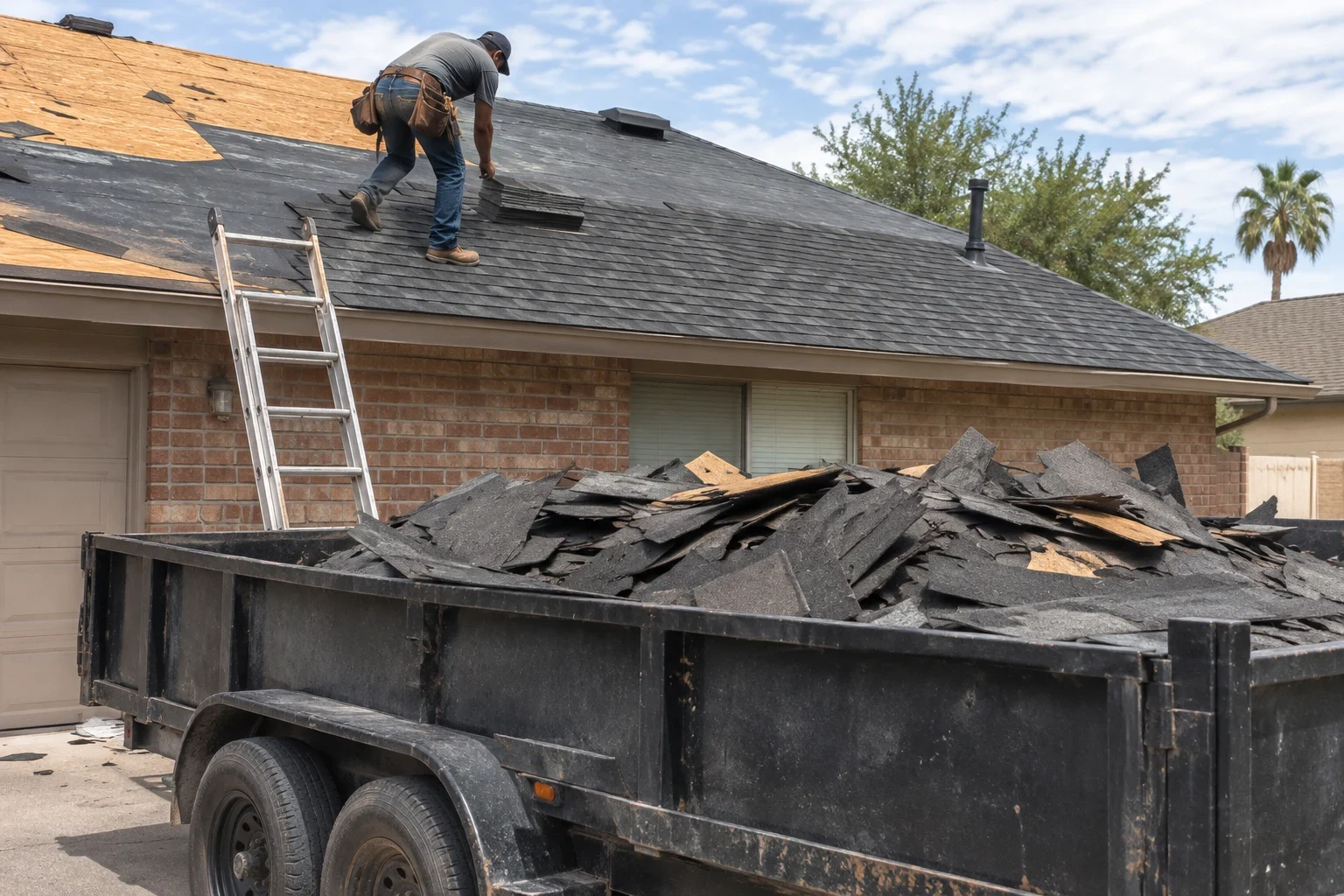
We strip the old covering and underlayment all the way down to the roof deck. Laying a new roof over the old one puts extra weight on the framing and keeps any damage out of sight, so our work starts on bare wood.
- 02
Deck check and repair
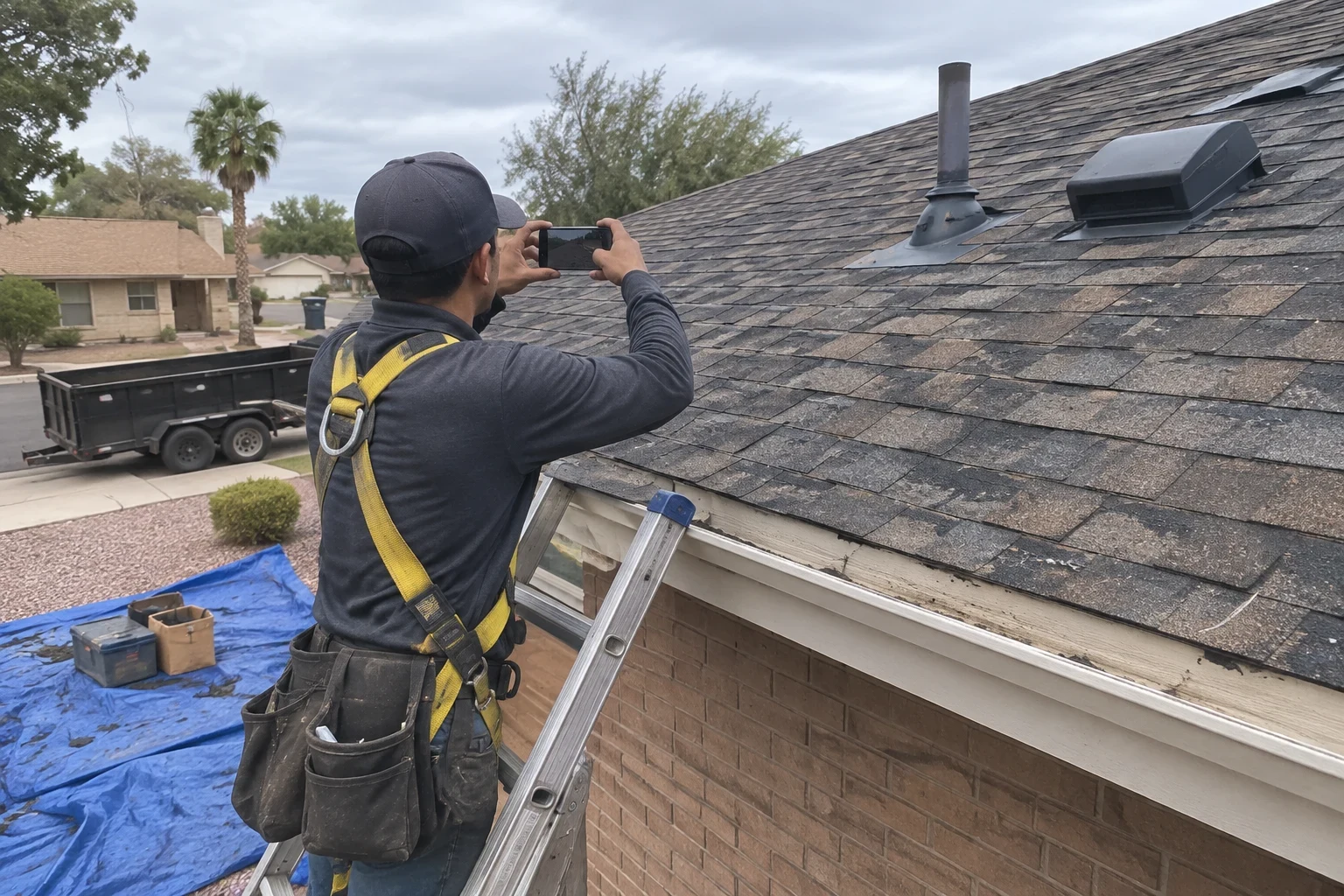
Once the deck is bare, we look for sheathing that is soft, delaminated or cracked from heat, and we replace it. Photos of anything we find reach you before it is covered again.
- 03
New underlayment and flashing
Underlayment does the real waterproofing, especially under tile. We lay a high-temperature underlayment suited to the heat roofs take here, with new flashing at walls, vents and valleys.
- 04
Ventilation that works
On a summer afternoon an attic can run far hotter than the air outside. We review intake and exhaust vents and correct them so heat escapes rather than cooking the new roof from underneath.
- 05
Your choice of finish
Tile, architectural shingle, spray foam with a reflective coating, or a flat roof membrane. We describe how each one handles strong sun and help you settle on what fits your home.
- 06
Cleanup and final walk
Old material is loaded straight into a bin or trailer so it stays out of your planting beds. Before we leave, a rolling magnet goes over the lawn and drive to pick up stray nails, and we look over the finished roof together.
Questions about Roof Replacement?
Call(480) 351-3961Signs Your Roof May Need Replacing
Leaks in more than one place
One leak usually means a repair. Stains appearing in several rooms point to underlayment that is failing across the whole roof.
Brittle, cracked underlayment
Older felt underlayment under tile dries out and tears after years of summer heat. The tiles may look fine while the layer beneath them has stopped keeping water out.
Shingles losing granules
Bald patches, curling edges and heavy grit in the downspouts mean the shingles have lost their UV protection and are breaking down quickly.
Foam worn through its coating
Exposed, dark or crumbling foam has lost its protective layer. Small areas can be recoated, but widespread damage usually calls for new foam.
A sagging or spongy deck
Soft spots underfoot or a visible dip in the roofline suggest moisture has reached the decking. That needs attention before it spreads.
How the Job Runs
- 1
A look at the roof and a written plan
We walk the roof, check the attic where we can, and talk with you about materials. You get a written, line-item estimate that shows what is included and what could change.
- 2
Permit and scheduling
We pull the reroof permit the city requires and set a start date. In the hottest months our crews start at first light so the heaviest work happens before the afternoon sun.
- 3
Tear-off and deck repair
We protect landscaping, windows and patio areas with tarps, then strip the roof. Any damaged decking is replaced the same day it is uncovered, so your home is never left open.
- 4
Installation and inspection
Underlayment, flashing, vents and the new roof go on in order. The city inspection is scheduled when the work is ready, and we stay involved until it passes.
- 5
Cleanup and walk-through
The yard is cleared and swept, and we walk the finished roof with you and answer any questions.
What Shapes the Price of a New Roof
We price every replacement from your roof itself, not from a chart. The written estimate breaks the work into separate lines, so the cost of tear-off, materials, labor and permit is easy to follow. If something could change once the old roof is off, such as hidden deck damage, we explain that before you agree to anything.
- Roof size and pitch
- A larger roof needs more material and more hours. Steeper slopes take longer because the crew has to work them carefully.
- Material choice
- Tile, shingle, foam and flat roof systems each come with their own material and labor costs. Sound concrete tile can sometimes be lifted and relaid, which changes the numbers.
- Condition of the deck
- Any boards that have gone soft with rot or started separating into layers get cut out and replaced with new sheathing. How much of that a roof needs is only clear after the old covering is stripped, and you see photos of it before it becomes part of the job.
- Layers and complexity
- Multiple old layers, a roof crowded with vents, skylights or valleys all add time to both the tear-off and the new installation.
- Permit and disposal
- The permit fee and hauling off the old roofing are part of every replacement, and each shows up as its own line on your estimate.
Common Questions About Replacing a Roof
How many days will the work take?
Once the crew starts, a typical replacement runs a few working days. Roof size, the material you choose and any deck repairs we uncover all affect that. Tile usually takes longer than shingle. You get a realistic schedule from us before the first day.
Can I stay home while the roof is being replaced?
Yes, and most people do. Tear-off is loud, so we ask that pets stay indoors and cars stay out of the driveway. Your home is covered and closed up at the end of each day.
Can my old tiles be reused?
In many cases, yes. Concrete tile often outlasts the underlayment beneath it, so we can lift the tiles, put down new underlayment and relay the ones that are still sound. Cracked pieces are swapped for a matching profile when one is available.
Is summer a bad time to replace a roof?
Roofs here can be replaced any time of year, with some care. In the heat our crews begin early and plan around the afternoon monsoon storms. We handle shingles gently in high temperatures because they mark more easily.
Should I switch to a different roofing material?
Sometimes it is worth it, for example moving a low-slope section from rolled roofing to foam. We walk you through the differences in weight, cost and how each material holds up in strong sun, and the choice stays yours.
Ready to Plan Your New Roof
Tell us about your home and what the roof has been doing. We will talk through your options and set a time to look at it in person.