ServicesFoam Roofing
Foam Roofing in Tempe
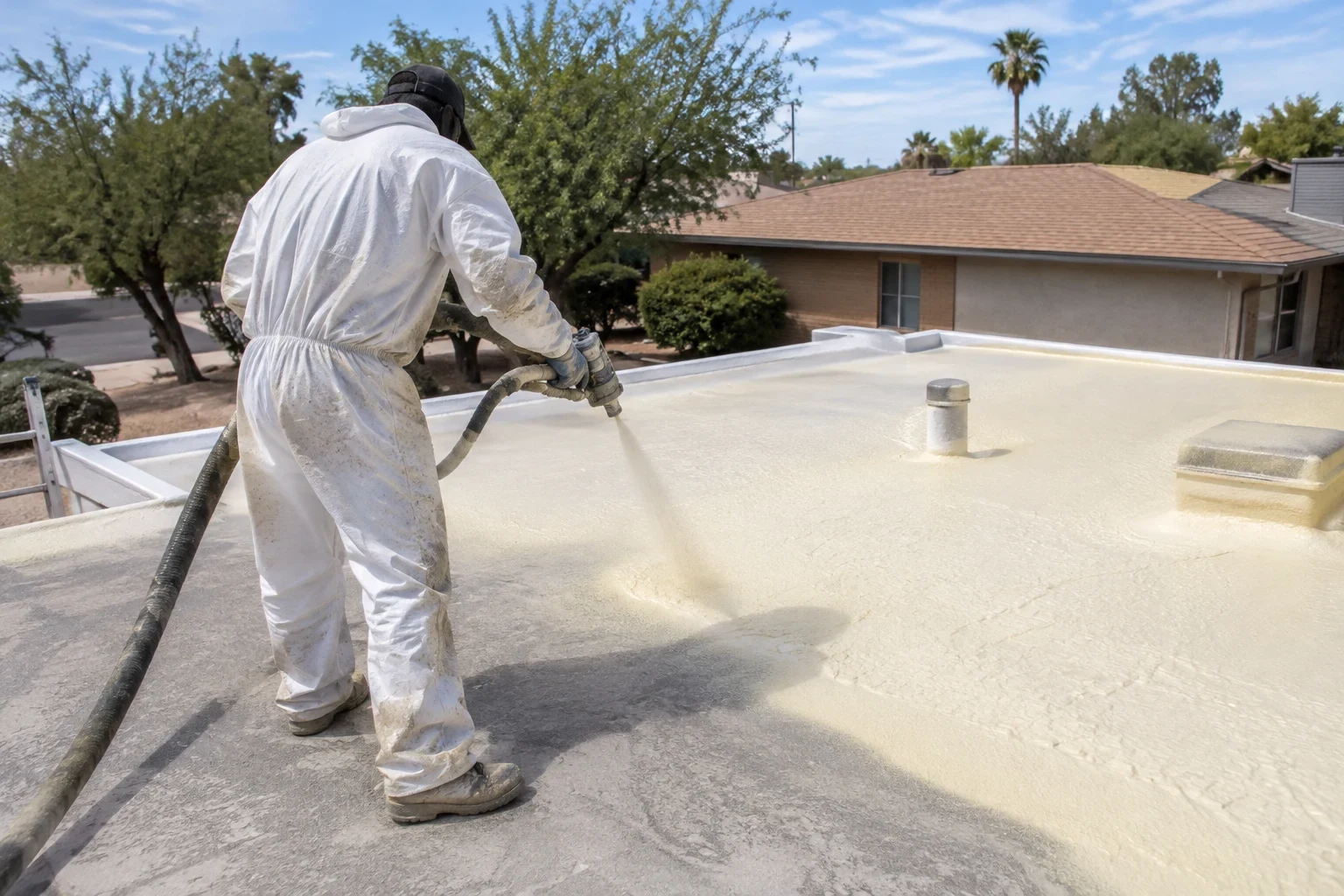
We spray new foam roofs, recoat worn ones and repair blistered or damaged foam on low-slope homes. You get a continuous roof with no seams, shaped to drain, and a protective coating applied at the right thickness so the foam underneath stays sealed for years.
What a Foam Roof Is and When It Makes Sense
Spray polyurethane foam goes on as a liquid and expands into a rigid, closed-cell layer that bonds to the deck. Because we spray it in place, there are no seams or laps for water to find, and we can build it thicker in low spots so the roof drains toward its scuppers instead of holding water.
Foam itself does not stand up to sunlight. Left bare, it turns orange, then brown, then powdery. What protects it is the elastomeric coating on top, usually acrylic or silicone, often finished with embedded granules. Keep that coating intact and recoat on schedule, and a foam roof can serve for decades.
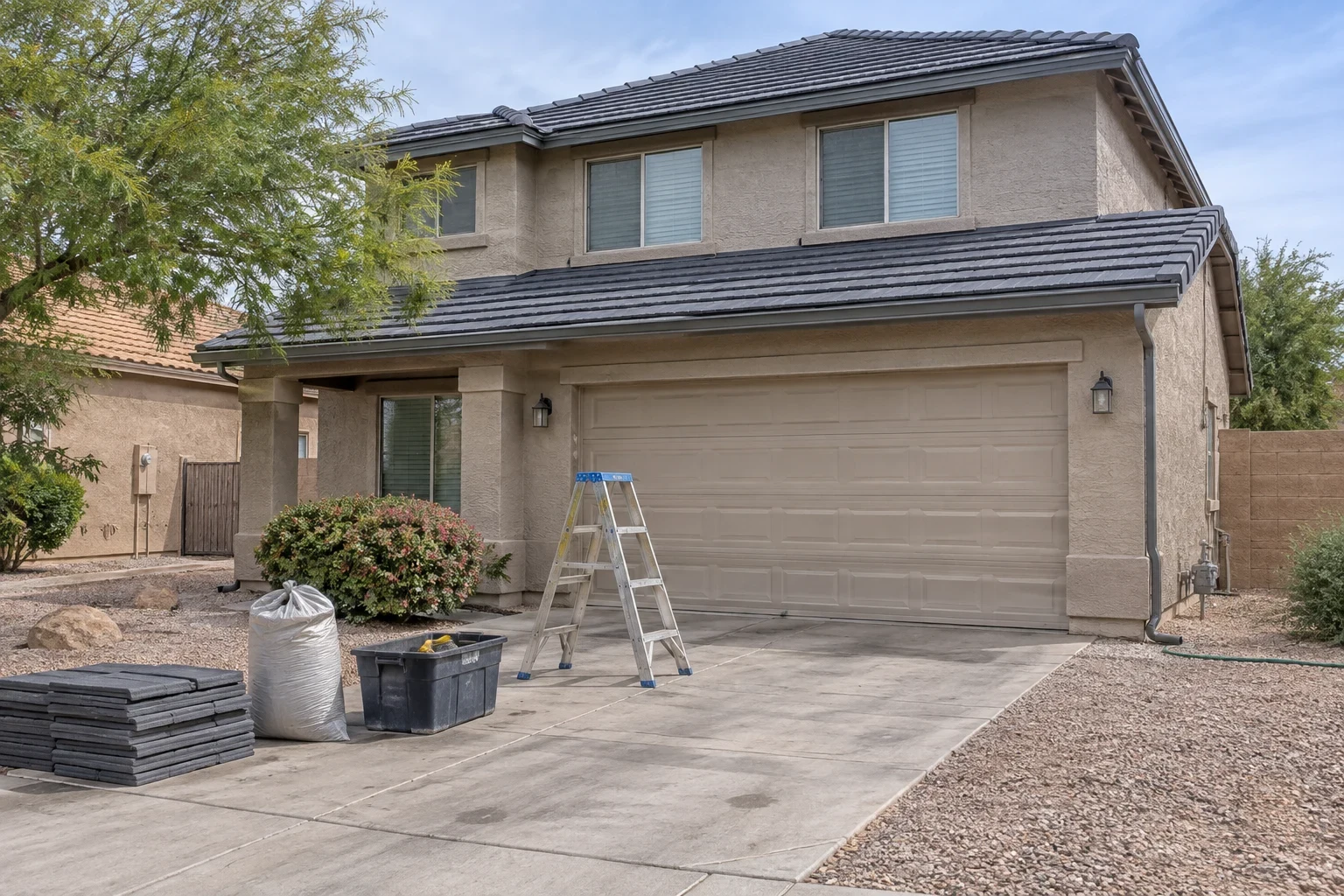
It is a good fit for the flat and low-slope roofs common on ranch and Pueblo-style homes around Tempe, especially where parapet walls make other systems awkward to detail. If your roof is pitched, our Tile Roofing or Shingle Roofing pages are the better place to start.
What Our Foam Roofing Work Covers
- New foam roof systems
- We prepare the deck or existing roof, spray foam to the thickness and slope the roof needs, then apply base and top coats. Granules go into the final coat where foot traffic or extra protection is wanted.
- Recoating aging foam
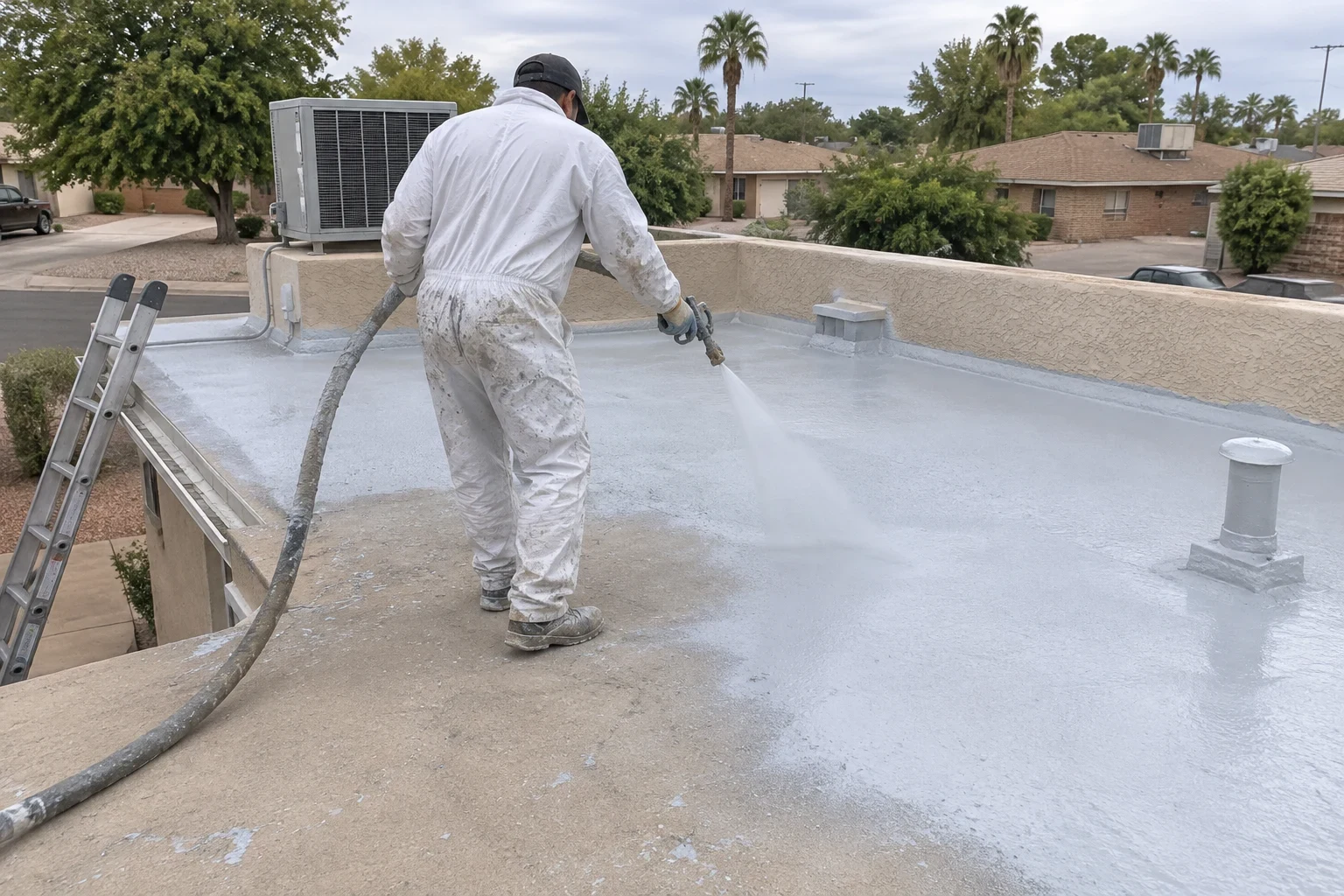
- When the coating has worn thin but the foam is sound, a recoat is usually the right answer. We clean the surface, repair small damage, prime where the coating calls for it and apply fresh coats at measured thickness.
- Blister and bird damage repair
- We cut out blistered or pecked foam, fill it with new foam, trim it flush and seal it under coating so the patch sheds water like the rest of the roof.
- Parapets, scuppers and penetrations
- Most leaks on foam roofs start at edges and openings. We carry foam and coating up parapet walls and around vents, AC stands and scuppers so those spots are sealed as one piece with the field.
- Cleanup and protection
- We cover nearby walls, windows, cars and plants before spraying, since overspray travels in a breeze. At the end we clear debris and walk you through the finished roof.
Signs Your Foam Roof Needs Attention
Tan or orange foam showing through
When the gray or white coating wears away and bare foam appears, UV is already breaking it down. Recoating soon usually avoids having to replace foam later.
Blisters or soft spots
Raised bubbles point to moisture or a bond failure below the surface. A few small ones are a simple repair; blistering across the roof can mean wet material underneath.
Holes from birds
Birds peck at foam, especially where the coating has thinned. Every small hole becomes an open path for water when the monsoon storms arrive.
Puddles that outlast the storm
If water is still standing on the roof a day or two after rain, the coating beneath it wears out faster than the rest. It also tells us that area needs more foam built up so water moves off.
Stains near walls or vents
Ceiling marks close to a parapet or roof opening usually trace back to a cracked edge detail rather than the middle of the roof.
What Shapes the Cost of a Foam Roof
Foam work is priced from the roof itself, so we give you a number by phone only after we understand your situation, and a written figure after we have seen the roof. These are the things that move it most.
Recoat versus new foam
A recoat over healthy foam is the lighter job. Spraying a new system, or adding foam to correct slope, takes more material and more time.
What is underneath
Wet insulation or saturated old roofing has to come out before foam goes down, since trapped moisture causes blisters later. We find this before quoting, not halfway through the job.
Coating choice and thickness
Silicone and acrylic coatings differ in cost and in how they handle ponding water. More coating thickness means longer service between recoats.
Size, edges and access
Square footage matters, but so do parapet walls, roof openings, rooftop equipment and how easily we can reach the roof and protect the area around it.
How a Foam Roofing Job Runs
- 1
We look at the roof and talk it through
We walk the roof, probe suspect areas, check drainage and take photos of what we find. Then we explain whether a recoat, repair or new foam makes sense, and why.
- 2
You receive a written estimate
It lists the scope line by line: foam thickness, coating type and number of coats, edge work and any wet material that has to come out. If the job needs a permit, we pull it.
- 3
Prep and spraying
We power wash or scarify, remove damaged material and mask the house. Foam needs a dry surface and calm air, so in summer we start early and stop when wind picks up.
- 4
Coating and final walk
Coats go on with drying time between them, and we check thickness as we work. We finish with cleanup and a walk of the roof with you.
Foam Roofing Questions
How long does a foam roof last?
The foam can last for decades if it stays covered. The coating is the part that wears, and it usually needs renewing every several years depending on the product and its thickness. Keeping up with recoats is what lets a foam roof go the distance.
Can foam go over my existing roof?
Often it can, if the existing roof is dry and firmly attached. We check for moisture first, because foam sprayed over wet material will blister. Where sections are wet, we remove them and spray over a sound surface.
Will a foam roof help keep my home cooler?
Foam adds a continuous insulating layer above the deck, and a light reflective coating cuts the heat the roof absorbs. Many homeowners notice upstairs rooms or the space under the roof stay more comfortable, though results vary with your home and insulation.
Is foam better than other flat roof options?
It suits roofs with many penetrations, odd shapes or poor drainage, since it can be sprayed to slope. Other systems make sense in other cases. Our Flat Roofing page covers the alternatives, and we will tell you plainly which fits your roof.
How do I get a quote for foam work?
Phone us and tell us about the roof and anything that has caught your attention, such as bare foam or a ceiling stain. From there we arrange a visit to see the roof in person. The scope and figures then come to you as a written estimate, and everything is handled by phone and on site.
Keep Your Foam Roof Sealed
Whether your coating is wearing thin or you are weighing foam for a new roof, a short conversation helps set the right scope. We serve Tempe, Mesa, Chandler, Gilbert and nearby communities.