ServicesRoof Repair
Roof Repair in Tempe
A water stain on the ceiling rarely sits right under the problem. We trace the leak to its source, show you photos of what we found and repair the part that is failing, so you are not paying for a new roof when a careful fix will do.
Fixing the cause, not just the stain
Most roof leaks start small: a slipped tile, a cracked pipe boot, a seam on a flat section that has opened up. Water then travels along the deck or underlayment before it shows inside, which is why patching the spot above the stain so often fails. We follow the path back to where water actually gets in.
Desert sun is hard on roofing. Years of intense UV and summer heat dry out felt underlayment, harden sealants and break down foam coatings, and the first heavy rain of the season is usually when the damage finally shows. We repair with materials suited to that heat and finish the work so it blends with the rest of your roof.
Sometimes a repair is not the right answer. If the underlayment is brittle across the whole slope, we will say so plainly and explain what roof replacement would involve. The choice stays yours.
What a repair visit covers
- Tracing the leak
- We check the attic or ceiling area where the stain appears, then work outward on the roof to find the entry point. Penetrations, valleys and transitions get close attention because that is where most leaks begin.
- Tile lift and reset
- On concrete and clay tile roofs we lift the tiles around the problem, replace the damaged underlayment beneath and relay the field. Broken tiles are swapped with the closest match we can source.
- Flashing and pipe boots
- Cracked rubber boots, rusted vent flashing and loose step flashing at walls are replaced rather than smeared with sealant. A properly bent and lapped piece of metal outlasts any caulk bead.
- Flat and foam sections
- We cut out blistered or bird-damaged foam, refill it and recoat the area. On flat roofs we reseal seams and the curbs around rooftop AC units and coolers, which are frequent leak points.
- Photos and cleanup
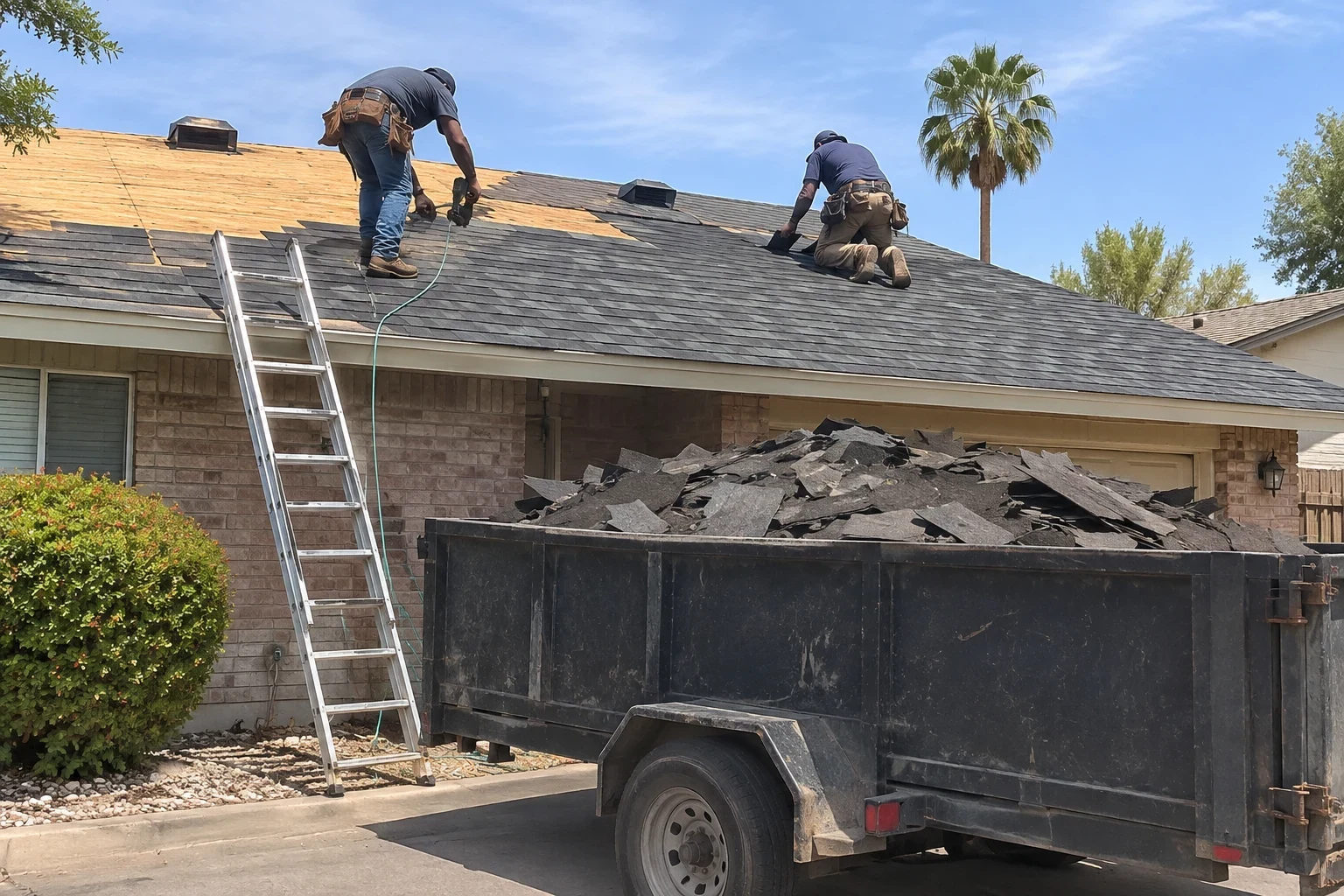
- You see what we found before and after the work. Old material, nails and tile fragments leave with us.
Signs your roof needs attention
Stains after rain
Brown rings on a ceiling or wall after the summer rains mean water is already past the roofing. The sooner it is traced, the less drywall and insulation get ruined.
Cracked or slipped tiles
Tiles shifted out of line or showing gaps let sun and water reach the underlayment. Foot traffic from satellite or solar installs is a common cause.
Soft spots on a flat roof
Spongy areas, ponding that lingers for days or blisters in the coating usually point to water trapped in the layers below.
Curling or bare shingles
Edges lifting or patches where the granules are gone expose the asphalt to UV, and those shingles will not seal down again.
Brittle sealant at penetrations
Cracked caulk around vents, skylights and chimney flashing is a slow leak waiting for a downpour.
What shapes the cost of a repair
From inside the house, two leaks can look identical and still call for very different work up top. What you pay comes down to which part has failed, how far the damage reaches and how hard the area is to get to. Each of those is spelled out in the written estimate before you decide anything.
Roof material
Tile repairs mean lifting and relaying the field around the leak, which takes longer than swapping a few shingles. On foam and flat roofs, the size of the patch depends on how far moisture has traveled.
Condition underneath
If the decking under a leak has gone soft or rotted, that section has to be cut out and replaced. We can only see it once the area is open, and we show you before going further.
Size and access
Steep pitches, second stories and narrow side yards add setup and safety time. A small area on a single-story ranch is a simpler job.
Matching materials
Discontinued tile profiles or colors can take extra time to track down. Whether we use salvaged or close-match tiles affects both the cost and how well the repair blends in.
How a repair day runs
- 1
A conversation first
You call and describe what you are seeing. We ask about the roof type, its age and where the water shows, then set a time to come out.
- 2
Finding the source
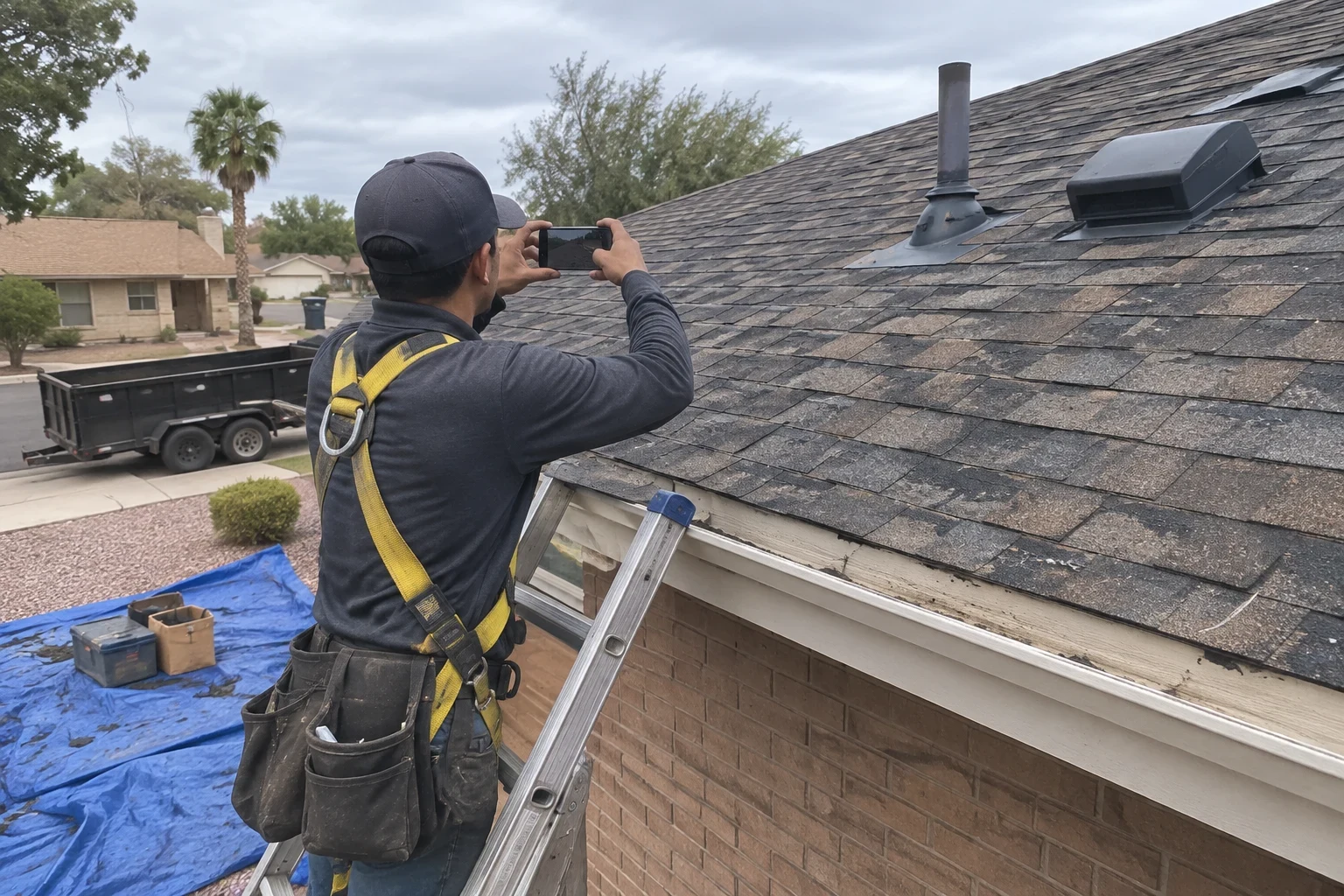
On the roof we locate the failure and photograph it. You get an honest read on whether a repair will hold or the area is too far gone.
- 3
A written estimate
We put the scope and price in writing, line by line, before any work begins. Nothing is added without talking to you.
- 4
The repair
In the warmer months we start early to work while materials and crews handle the heat well. We protect landscaping and walkways, complete the repair and match the finish to the surrounding roof.
- 5
Walkthrough
We clean up, show you the finished work and the photos, and explain anything worth watching over the next season.
Roof repair questions
My tiles look fine. Why is the roof leaking?
Concrete tile can last for decades, but the felt beneath it wears out much sooner under this kind of heat. Once that felt turns brittle and splits, water that slips past the tiles runs straight onto the deck. In most cases we replace the underlayment in the affected area and set your existing tiles back in place.
Will a repair match the rest of my roof?
We aim for a repair you have to look for. On tile roofs we hunt down the same profile and color or reuse salvaged pieces when possible. Fresh material next to sun-faded tile can stand out for a while, and we mention that before any work begins.
How do I know whether to repair or replace?
When the damage sits in one area and the rest of the roof is sound, a repair is the sensible choice. When underlayment or coating is failing over most of the surface, repeated patches tend to cost more in the long run. We show you the photos and give you a straight recommendation.
Do I need a permit for a repair?
Small repairs generally do not require one. If the work grows into reroofing a larger section, a city permit may be needed, and we take care of it and tell you how it affects the schedule.
Can you repair a foam roof or does it need recoating?
Isolated damage like blisters, punctures or bird pecks can be cut out and filled. If the coating is thin across the whole surface, a full recoat is usually money better spent, and our Foam Roofing page or a phone call can walk you through it.
Will walking on my tile roof break more tiles?
Tile can crack under careless footsteps, so we step only where each tile is supported by the one beneath it and spread our weight on pads around the work area. We also bring spare tiles in case an old, brittle piece gives way. Anything that cracks while we are up there is replaced before we leave.
Get the leak traced and fixed properly
Describe what you are noticing and what kind of roof is on your home. We will schedule a visit, follow the water back to where it gets in and put the scope and price in writing before anything is touched.