ServicesTile Roofing
Tile Roofing in Tempe
Most tile roofs don't fail at the tile. They fail underneath, where heat-baked underlayment cracks and lets water reach the deck. We repair, reset and replace tile roofs with care for the tile you already have, and we explain what we find before any work is priced.
The tile is rarely the problem
Concrete and clay tile can outlast the house it sits on. The underlayment beneath it is a different story. On a roof that bakes in full sun through Tempe summers, older felt dries out, turns brittle and starts to split along the battens and in the valleys. Water that slips past the tile during a hard rain then finds bare wood instead of a membrane.
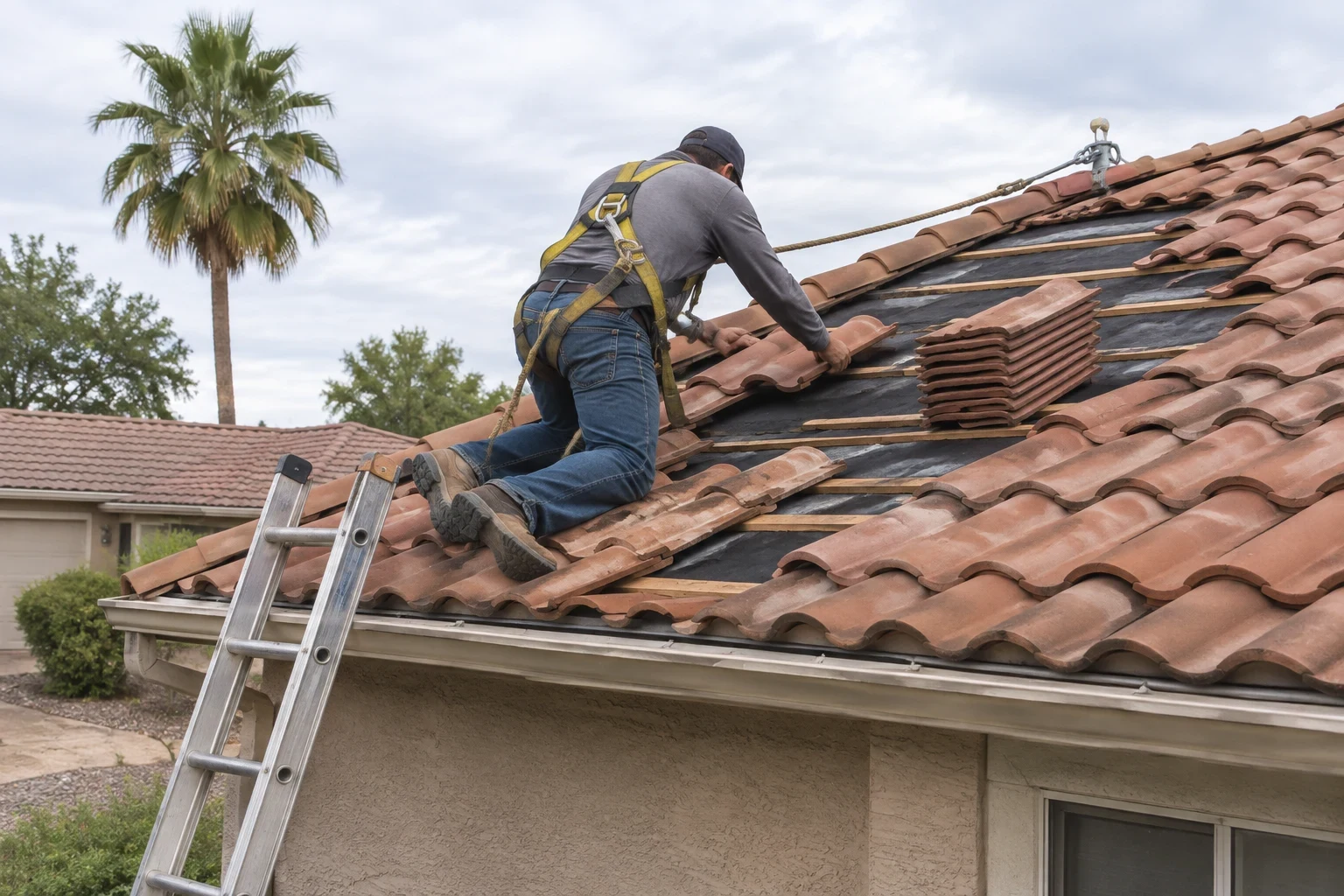
So a large share of the tile roofs we work on follow the same plan. The tile comes off and is stacked on the roof, new underlayment and flashings go down, and the original pieces are set back in their pattern. From the street your home looks unchanged, and your budget goes into fresh material in the layer that actually keeps water out.
When a roof needs less, we say so. A few cracked tiles or a slipped ridge cap is a small repair, not a project. If the whole system is past saving, our roof replacement page covers what a full tear-off involves.
What our tile roofing work covers
- Underlayment replacement
- We remove the tile, strip the old felt down to the deck and install new underlayment suited to tile roofs in high heat. Laps are run so water sheds toward the eave, never into the next course.
- Tile reset and relay
- Sound tiles are cleaned, stacked and set back in their original pattern. We handle them by hand to keep breakage low, then replace any that crack with the closest match we can source.
- Flashings and valley metal
- Pipe jacks, wall flashings, skylight curbs and valleys are where tile roofs leak first. We replace metal that is rusted, bent or smeared with old mastic instead of patching around it.
- Hips, ridges and mortar
- Cracked or loose ridge mortar lets wind lift the caps. We reset hip and ridge tiles and secure them so they stay put.
- Bird stops at the eaves
- Pigeons like the gap under the first row of tile. New bird stops keep nests and debris off the underlayment.
- Broken tile repair
- For a roof that is otherwise in good shape, we swap cracked or missing tiles and check the felt under each one before closing it up.
Signs your tile roof needs attention
Ceiling stains after rain
A water spot that appears after the first heavy storm of summer usually means the underlayment has opened up somewhere above it. The tile can look perfect from the street.
Cracked or slipped tiles
Foot traffic from satellite, solar or HVAC work breaks tile more often than weather does. A slipped tile also exposes the felt to direct sun, which ages it quickly.
Daylight or flakes in the attic
If you can see light through the deck, or find bits of dried felt on the insulation, the membrane has broken down.
Loose ridge caps
Caps that rock underfoot or have mortar missing at the joints are the next thing wind will move.
Birds at the eaves
Nesting under tile packs debris against the underlayment and keeps water from draining off the roof.
An original roof never relaid
If your home still has its first underlayment under the tile, it is worth having us look before a leak decides the timing for you.
What shapes the price of tile work
Square footage alone says little about what a tile job will cost. The bigger variable is hidden under the tile: how much underlayment, decking and flashing has to be replaced once it comes off. We give each of those its own line on the quote so nothing is buried in a single total.
Roof size and pitch
More square footage means more tile to lift and more underlayment to lay. Steeper roofs take longer to work and to stack tile on safely.
Tile type
Clay S-tile is more fragile than flat concrete tile and takes more care to remove and relay. Discontinued profiles can be hard to match, which affects how replacements are sourced.
Deck condition
Rotted or delaminated sheathing found once the felt is off has to be replaced before new underlayment goes down. We photograph it and price it by the sheet before doing the work.
Underlayment choice
Heavier felts and synthetic underlayments differ in cost and in how they hold up to roof temperatures. We explain the options and recommend one for your roof.
Flashings and penetrations
Skylights, chimneys, solar mounts and clusters of pipe jacks add detail work and new metal.
How a tile job runs
- 1
A careful look at roof and attic
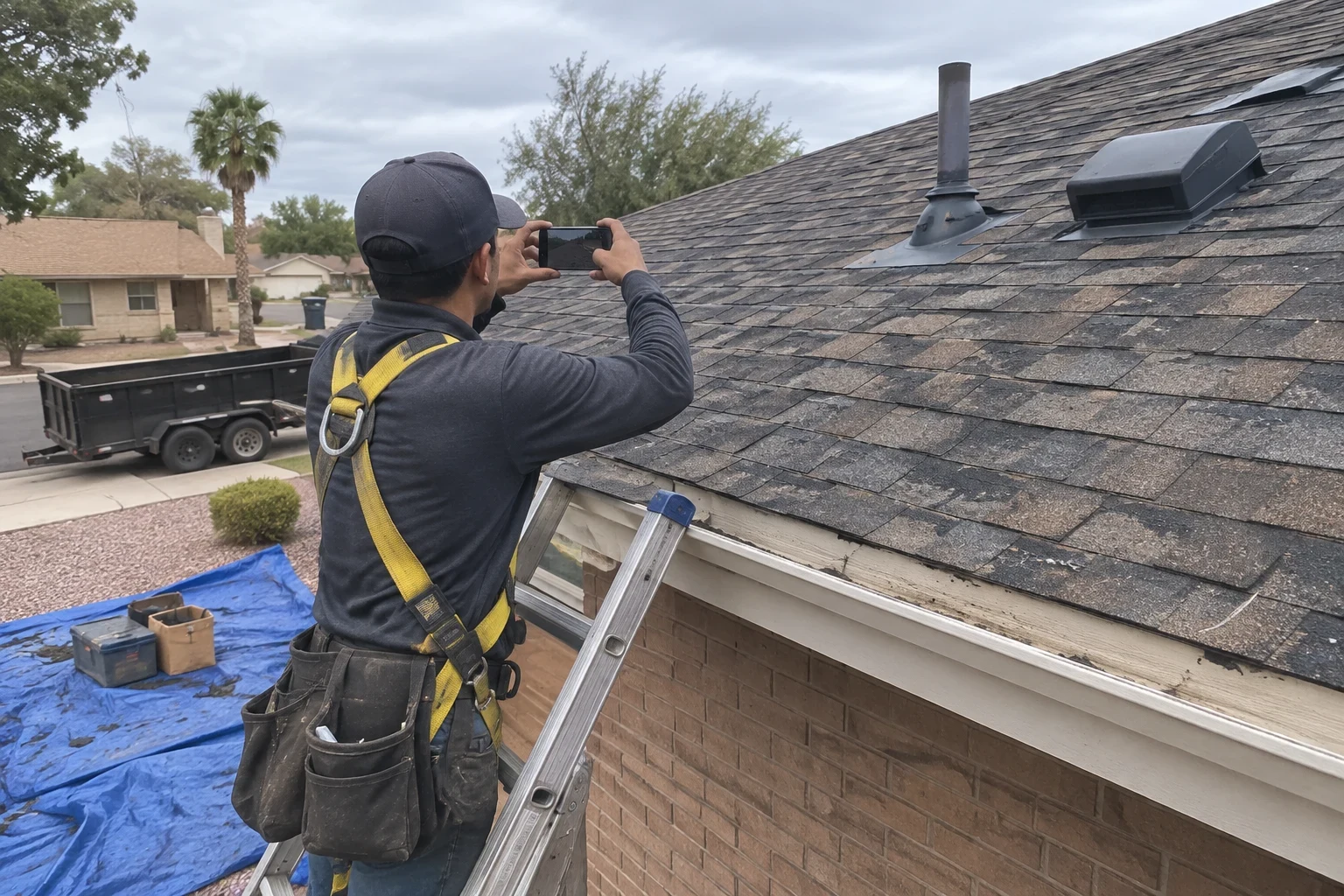
We walk the roof with care, lift tiles in a few spots to see the underlayment, and check the attic for staining. You get photos of what we found.
- 2
A written, line-item quote
Underlayment, flashings, replacement tiles, deck repair and the permit each get their own line, so you can see what every part costs and why.
- 3
Permit and scheduling
Underlayment replacement generally needs a city permit in Tempe. We pull it when the job requires one and start early in the day while the roof is cooler.
- 4
The work itself
Tile comes off in sections and is stacked on the roof, so your yard stays clear. Each section is dried in before we stop for the day, then we relay the tile, set the ridges and finish the flashings.
- 5
Cleanup and walkthrough
We sweep for nails with a magnet, haul away old felt and broken tile, and walk you through the finished roof with photos of the new underlayment before it was covered.
Tile roofing questions
Can you reuse my existing tile?
In most cases, yes. Concrete tile usually comes off and goes back on in good condition, and clay can too with careful handling. We plan for some breakage and source matching tile for any that crack.
How long does a lift and relay take?
It depends on the size of the roof and how much deck repair turns up once the felt is off. A typical single-story home takes several working days. We keep the roof dried in at the end of each day, so an afternoon storm is not a worry.
Does someone have to be at the house during the job?
Not for most of it. We like to meet you on the first day to settle access and hear about anything you want protected, such as a planter bed or a side gate that sticks. Once the roof is finished, we take a few minutes to show you the work. The rest of the time, all we need is a clear path around the house and space for the trailer or dumpster.
Will my solar panels need to come off?
Usually, yes, because the tile and underlayment under the array need the same work as the rest of the roof. Panel removal and reinstallation is typically handled by a solar company, and we coordinate our schedule around theirs.
Should I switch from tile to shingles?
Some homeowners do, usually to lower the cost of a full replacement. Tile is heavier and lasts far longer, and your roof framing is already built to carry it. We'll lay out both options plainly, and our shingle roofing page covers the other side.
Find out what is under your tile
A short conversation tells us your roof's age, tile type and any leaks you've noticed. From there we set a time to look and give you a clear, line-item quote.